
1929 Wheat penny value depends far more on grade than most collectors expect. The date itself is not rare. Millions were struck in Philadelphia, Denver, and San Francisco. In worn condition, these coins are affordable. In higher Mint State levels, prices rise quickly, especially for Denver and San Francisco pieces.
Here, we offer you to check how the value changes by grade, color, and mint mark. If you are new in numismatic, or just need quick answers, try the reliable apps for answers. For example, Coin ID Scanner can provide minting details and even an estimated market value from a photo.
And now, let us consider other nuances of the topic.
Mint Breakdown and Mintage
The 1929 cent was struck at three mints.
| Mint | Mintage | General Availability |
| 1929 (P) | ~185,000,000 | Common |
| 1929-D | ~41,730,000 | Scarcer |
| 1929-S | ~50,148,000 | Scarce, especially high-grade |
Philadelphia produced the largest number. Denver struck less than one-quarter of that total. San Francisco output was slightly higher than Denver, but still far below Philadelphia.
Mintage alone does not create a key date here. None of the three is rare in circulated grades. The difference appears in a higher condition. Denver and San Francisco coins are harder to find with strong luster and minimal marks.
Basic Specifications
| Feature | Detail |
| Year | 1929 |
| Composition | 95% copper, 5% tin, and zinc |
| Weight | 3.11 g |
| Diameter | 19.05 mm |
| Edge | Plain |
These are bronze coins. They are not clad. They are not steel. Copper content allows color designations: Brown (BN), Red Brown (RB), and Red (RD). Color affects price at higher levels.
Circulated Grades: G4 to VF20
Most surviving 1929 cents fall into this range. Heavy wear is common. Details on Lincoln’s hair and the wheat stalks are often flat.
Typical Market Prices
| Grade | 1929 | 1929-D | 1929-S |
| G4 | $0.50–$1 | $1–$2 | $2–$4 |
| F12 | $1–$2 | $3–$5 | $6–$10 |
| VF20 | $2–$4 | $6–$12 | $15–$25 |
Philadelphia examples remain inexpensive. Denver pieces show a moderate increase. San Francisco commands the strongest premium in this range.
The 1929-S begins to separate from the other two mints in VF and above. Demand for West Coast issues supports pricing.
In circulated grades, the coins remain accessible. They are collected as part of full Wheat cent sets, not as standalone rarities.
XF to AU: Where Collector Interest Increases
In Extremely Fine and About Uncirculated condition, coins show light wear. Most details are sharp. Luster may remain in protected areas.
Market Ranges
| Grade | 1929 | 1929-D | 1929-S |
| XF40 | $5–$10 | $15–$30 | $35–$60 |
| AU50 | $10–$20 | $40–$70 | $75–$120 |
The spread widens here. Denver and San Francisco coins rise faster than Philadelphia.
Collectors building higher-grade albums compete for XF and AU pieces. Eye appeal matters. Clean surfaces and natural color improve demand.
The 1929-S shows consistent strength in this band. Survival in lightly worn condition is lower than in Philadelphia.
Mint State: MS60 to MS65
This is where the market changes. Uncirculated coins show no wear. Surface preservation becomes the key factor.
Brown Examples (BN)
| Grade | 1929 | 1929-D | 1929-S |
| MS63 BN | $40–$80 | $150–$250 | $250–$400 |
| MS65 BN | $150–$300 | $600–$900 | $1,200–$2,000 |
Philadelphia remains the most affordable in Mint State. Denver shows a strong jump. San Francisco moves even higher.
In MS63, small contact marks are visible. In MS65, surfaces must be cleaner, with better strike and stronger luster.
The 1929-S becomes difficult in MS65 Brown. Supply thins out. Registry collectors compete at this level.
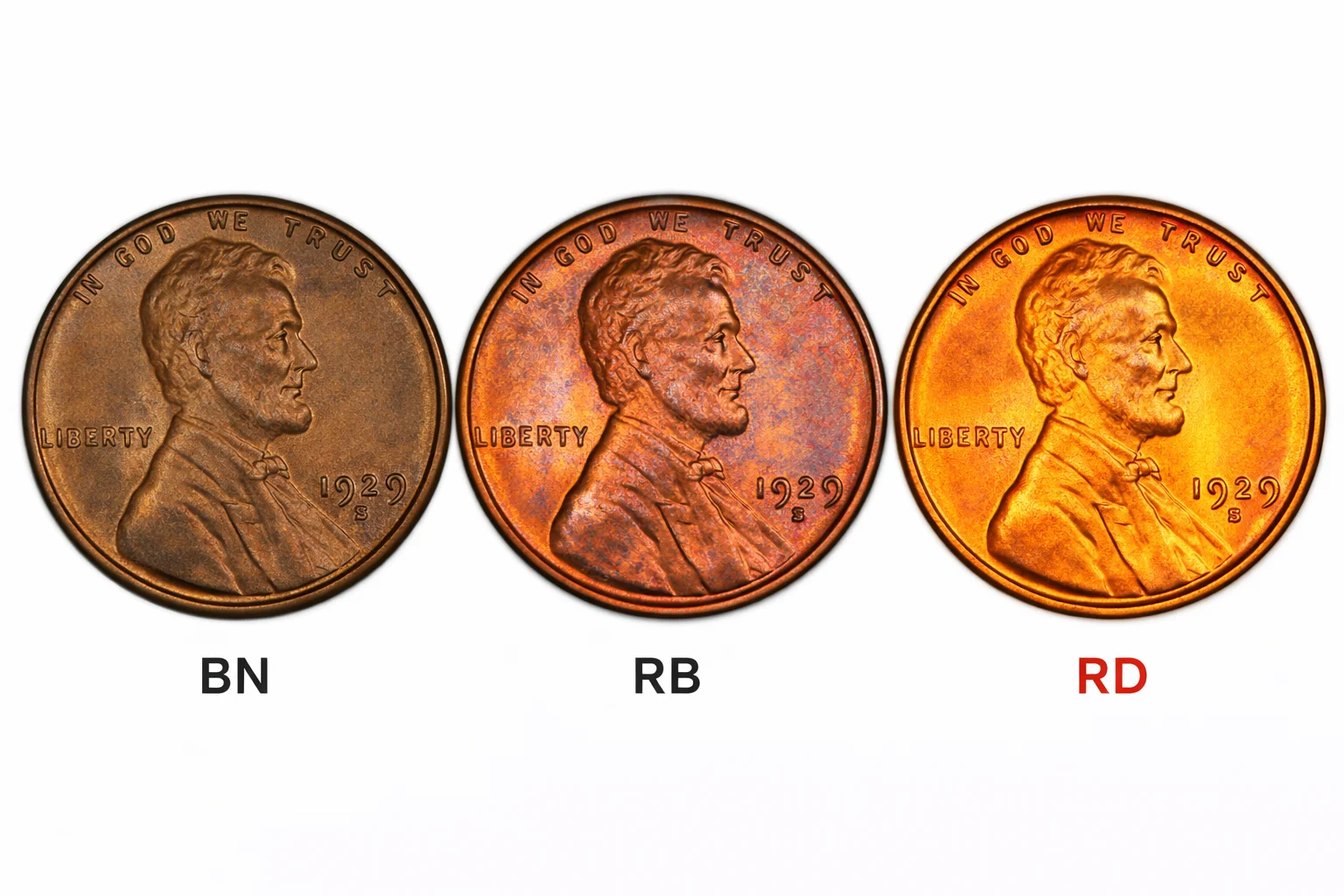
The Color Multiplier: BN vs RB vs RD
Copper reacts to air. Over time, red surfaces tone brown. Coins preserved carefully may retain red luster.
- BN (Brown): Fully toned brown surfaces.
- RB (Red Brown): Mix of original red and brown.
- RD (Red): Predominantly original mint red.
Color has a direct effect on price. Let’s see the difference in some examples. Example: 1929-S in MS65.
| Color | Approximate Value |
| BN | $1,200 |
| RB | $1,800–$2,500 |
| RD | $3,000+ |
The jump from Brown to Red is significant. Full Red examples are limited. Many coins were stored without protection. Oxidation reduced the original color.
For Philadelphia, Red examples are more available. For Denver and San Francisco, Red in MS65 and above becomes scarce.
Color creates another scarcity layer. Grade alone does not define the market. Surface originality does.
High-End Grades: MS66 and Above
At MS66 and higher, population numbers drop sharply. Even Philadelphia coins become selective. Denver and San Francisco coins become difficult.
MS66 examples can reach several thousand dollars for D and S mints. MS67 pieces are rare and appear at auction.
Conditional rarity defines this range. Mintage numbers no longer matter. Survival in near-perfect condition controls price.
One heavy mark can drop a coin from MS66 to MS65. That change can cut the value in half.
Strike Quality and Detail
Strike strength varies by mint. Some 1929 coins show softer wheat lines or less defined central details.
Strong strike indicators:
- Clear wheat lines.
- Full separation in lettering.
- Sharp rim.
Weak strike reduces eye appeal. Even in high grade, soft detail lowers market interest.
Collectors pay for sharp detail. Strike quality supports grading but does not replace surface preservation.
Surface Preservation
Contact marks are common on bronze cents. Coins were stored in heavy bags. Friction caused nicks before circulation.
Important surface factors:
- No cleaning.
- No harsh polishing.
- Even natural toning.
- Strong luster in Mint State.
Cleaned coins lose value. Artificial brightness does not improve price. Natural surfaces matter.
Originality supports premiums.
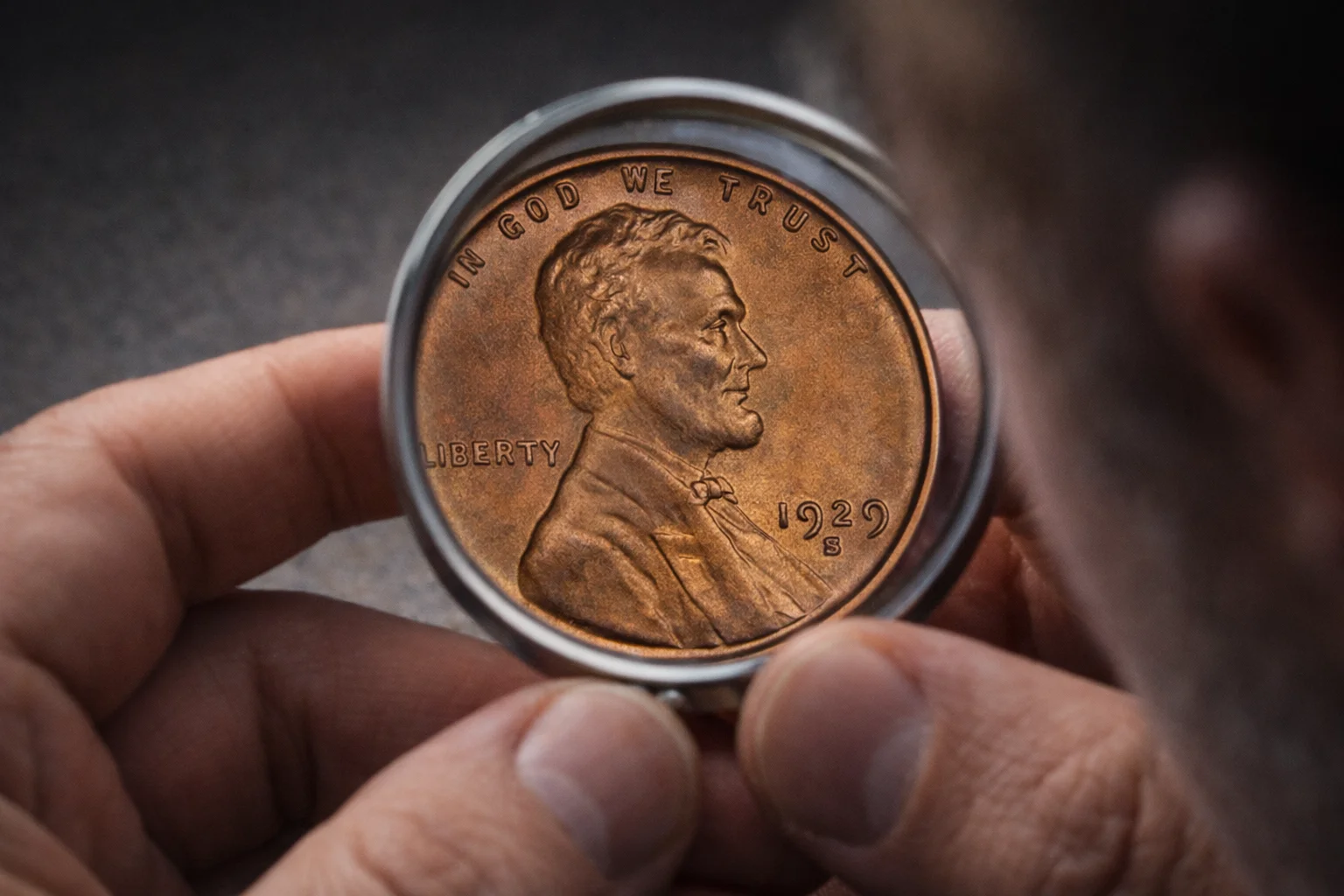
Mint Comparison: Which Is Strongest?
Philadelphia (P): Largest mintage. Most available. Lowest price at each grade.
Denver (D): Lower mintage. Higher price in XF and above. Scarcer in MS65+.
San Francisco (S): Moderate mintage but strongest demand in higher grades. Most expensive in MS levels.
The 1929-S often leads in premium above VF. In Mint State, it is clearly from Philadelphia.
Should You Grade a 1929 Cent?
Grading fees exceed the value of low-grade coins. Most circulated examples do not justify certification.
Consider grading if:
- The coin appears MS63 or better.
- Color shows strong red content.
- Surfaces are clean.
- It is a 1929-S in high condition.
Certified examples attract stronger bids in higher grades.
Investment Perspective
1929 is not a key date. It is not rare by production. It is a condition-sensitive year.
Low-grade coins remain affordable. Mid-grade coins carry modest premiums. Real growth appears at MS65 and above, especially with Red color.
Registry competition drives the top end. Collectors building high-ranking sets seek strong D and S examples.
Quality over quantity remains the best approach.
FAQs
- Is 1929 a rare Wheat cent?
No. All three mints struck large numbers. Circulated pieces are common. Scarcity appears only in higher Mint State grades, especially for Denver and San Francisco.
- Which mint is worth the most?
1929-S usually brings the strongest prices in XF and above. Denver follows. Philadelphia is the most available and typically the least expensive in the same grade.
- Does Red color really matter?
Yes. Full Red coins sell for much more than Brown examples in the same grade. In MS65 and higher, the difference can be two or three times.
- Are there major error varieties?
No major doubled dies define this date. Most value comes from condition and color, not dramatic errors.
- What is the highest sale?
Top 1929-S coins in MS66 Red and above have reached strong auction prices. Only the finest preserved pieces achieve those levels.
Conclusion
The 1929 Wheat cent is a grade-driven issue. In low grades, prices remain modest. In Mint State, especially MS65 and higher, premiums expand quickly.
Philadelphia pieces stay affordable. Denver shows stronger mid-level growth. San Francisco leads in higher-grade demand.
Color multiplies value. Red examples are the most desirable. Brown pieces are common.
Mintage does not define this year, but reservation does. For 1929, as for many other coins, condition controls everything.