
Circulation and rarity intersect in subtle ways.
Market $2 dollar coin value chart depends on objective technical parameters.
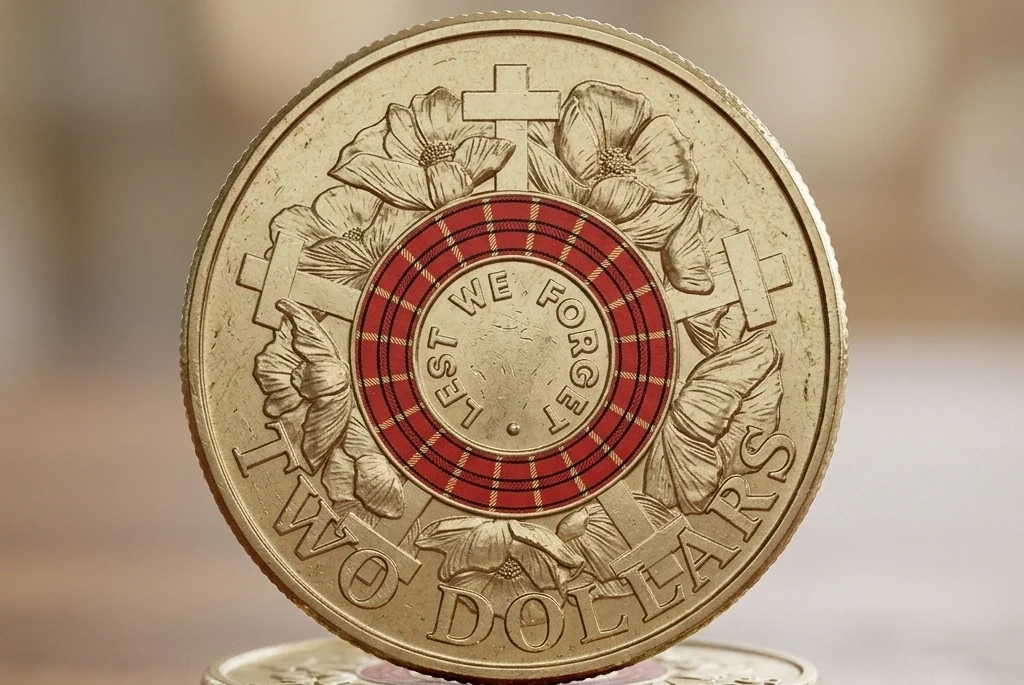
| Parameter | Australian Type | Canadian Type | New Zealand Type |
| Mass | 6.60 g | 6.99 g | 10.00 g |
| Composition | Aluminum Bronze | Coated Steel | Aluminum Bronze |
| Diameter | 20.50 mm | 28.00 mm | 26.50 mm |
| Thickness | 2.80 mm | 1.80 mm | 2.70 mm |
Deviation from these parameters indicates manufacturing errors or counterfeiting.
Use of aluminum bronze ensures a characteristic golden hue.
Market Price Formation Factors
Price develops under the influence of emission volume and physical wear degree.
Annual value change depending on rarity category:
- Circulation specimens in perfect condition → +4% per year
- Minting error coins → +12% per year
- Low-mintage commemorative issues → +7.5% per year
- Specimens with confirmed provenance → +15% per year
Value degradation process when physical defects are present:
Rim nicks → 20% price reduction
Abrasive cleaning traces → 65% price reduction
Deep field scratches → 40% price reduction
Surface oxidation → 15% price reduction
Condition Classification by International Standards
Condition assessment follows the Sheldon scale.
Professional certification use confirms object authenticity.
- MS65. Total absence of defects visible to the naked eye.
- AU58. Minimal friction traces on the highest relief points.
- XF45. Clear image details despite light general wear.
- VF30. Noticeable wear on protruding parts while maintaining main contours.
- VG8. Heavy surface abrasion with partial legend loss.
Assigning an MS70 grade increases base coin value 25 times relative to face value.
Analysis of Australian Commemorative Series
Royal Australian Mint in Canberra produces thematic series since 1988.
Color enamel coated coins represent the greatest interest.
| Mint Year | Event | Mintage | Record Price |
| 2012 | Red Poppy | 503,000 | $450 |
| 2013 | Purple Coronation | 1,000,000 | $180 |
| 2015 | Lest We Forget | 1,460,000 | $85 |
| 2019 | Police Remembrance | 2,000,000 | $35 |
Mintage reduction correlates directly with auction activity growth.
Value dynamics of the 2012 Red Poppy coin:
Year 2015 → $80
Year 2018 → $150
Year 2021 → $290
Year 2026 → $450
Average annual growth reaches approximately 14.5% during the last fourteen years.
Minting Errors and Their Value Influence
Technological failures at the mint create unique objects.
Absence of quality control at the production moment increases error value.
- Die displacement. Image shifted relative to the disk center.
- Double strike. Two images superimposed with rotation.
- Wrong planchet use. Minting on a disk of another denomination or metal.
- Die crack. Raised line on the coin surface.
Coins minted on planchets meant for other denominations exceed $2,500.
Presence of a clear shift boundary over 25% increases price to $1,200.
Canadian Two-Dollar Coins
Canada introduced the 2-dollar coin in 1996 replacing paper banknotes.
This type received the unofficial name Toonie.
Bimetallic construction consists of an inner core and outer ring.
Mechanical separation of coin parts deprives them of legal tender status.
Canadian coin price records:
- 1996 year with ring separation defect → $450
- 1999 year Nunavut series in MS67 condition → $120
- 2000 year Knowledge series in special packaging → $65
Percentage value distribution depending on year:
1996—2005 → 15% premium to face value
2006—2015 → 5% premium to face value
2016—2026 → face value when wear is present
Registry and Cataloging System
Every auction lot receives a unique identifier.
Maintaining a registry allows tracking rare specimen movement.
Reasons for value range changes in 2026:
Metal cost growth → Increase in base scrap price
Physical cash volume reduction in circulation → Rarity enhancement
New counterfeiting technology appearance → Demand growth for certified holders
Tax legislation changes → Auction final price adjustment
Mathematical Valuation Model
Market value formula considers three primary variables.
V = (B * K) + S.
V — final value.
B — market metal price in grams.
K — mintage rarity coefficient.
S — Sheldon scale condition premium.
At K values below 1.2, the coin is considered investment scrap.
At K values above 5.0, the object moves into the rare collectible category.
Mintage Data Influence on Value Forecast
Production statistics are published by state mints annually.
Data analysis over the last ten years reveals patterns.
Mintage over 50 million units → Stable price at face value level.
Mintage between 5 and 10 million units → Potential 2% annual growth.
Mintage under 1 million units → High volatility with upward trend.
Comparison of production volumes in 2024 and 2025:
Year 2024: 18.5 million units.
Year 2025: 12.2 million units.
Output reduction by 34% stimulates the secondary market.
Wear Analysis in Active Circulation Conditions
Aluminum bronze coins are prone to rapid luster loss.
Skin contact causes a chemical reaction with the copper component.
Patina formation is considered a natural process.
Artificial patina removal using acids destroys numismatic value.
Survival statistics for UNC condition coins 5 years after release:
- Storage in bank rolls → 98%
- Storage in home jars → 45%
- Presence in active circulation → 0.2%
These statistics confirm the necessity for early specimen isolation.
Rarity in New Zealand Coinage Context
New Zealand coins feature a specific design depicting the kiwi bird.
Metal composition changes in different periods affect mass.
1990 year specimens are considered base units for the collection.
Value of a 1997 coin in perfect condition reaches $45.
Mint luster presence increases price by 30% relative to matte counterparts.
Investment Risks and Return Rates
Coin acquisition requires accounting for commission fees.
Auction houses retain 10% to 20% of the final hammer price.
Shipping logistics costs comprise about 5% of value.
Net profit is fixed only with asset growth exceeding 25%.
Investment horizon for two-dollar coins spans 7 years.
Short-term speculation is justified only for coins with obvious minting errors.
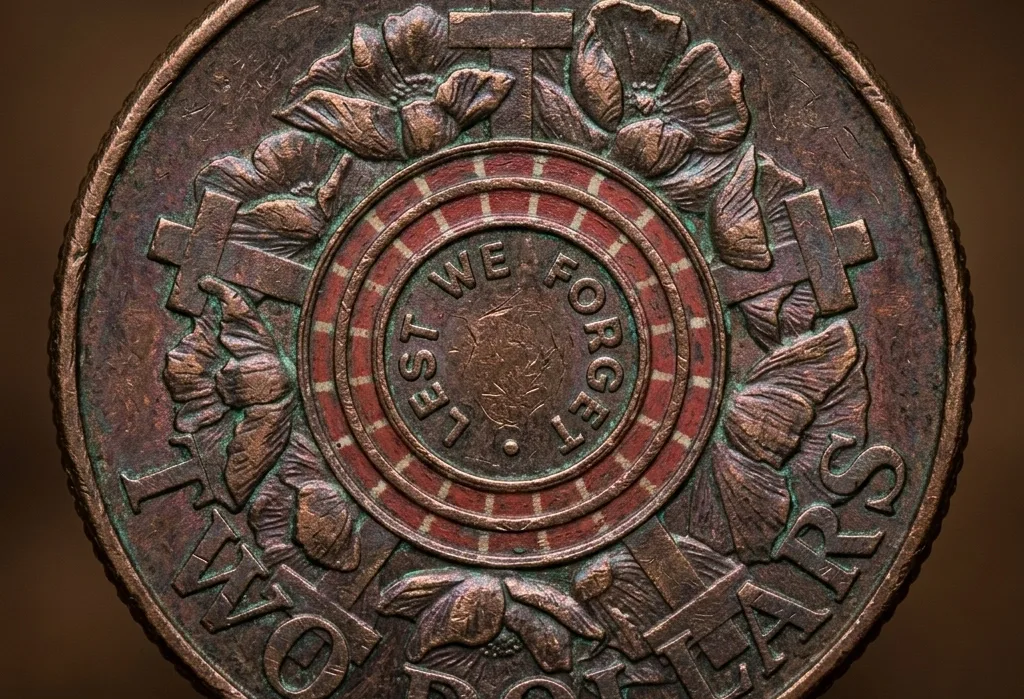
Comparative Defect Analysis
Different manufacturing error types have varying liquidity.
Errors visible without magnifying devices sell faster, but anyway, it’s better to check the errors with the free coin value checker.
- Planchet “Clip”. Semicircular metal deficiency on the edge.
- Weak strike. Faint detail impression due to die contamination.
- Rotation. Mismatch of obverse and reverse axes by 180 degrees.
Rotation by 180 degrees is valued at $200.
Rotation by 90 degrees is valued at $50.
Axis shift under 15 degrees is not considered an error and costs face value.
Metallurgical Aspects of Worth
Copper content in the aluminum bronze alloy reaches 92%.
Remaining 6% consists of aluminum and 2% of nickel.
Metal cost in one 6.60 g coin in 2026 amounts to $0.18.
Exceeding face value through metal content is impossible in current conditions.
Copper price growth on world exchanges by 500% would lead to mass coin melting.
Government prohibition on destroying coins limits legal recycling.
Design Change Chronology
Monarch portrait evolution on the obverse serves as a time marker.
King or queen changes initiate new type releases.
- Type 1: Young portrait
- Type 2: Mature portrait
- Type 3: Memorial issue
Transition years containing both portrait types are most valuable.
2023 year became the period for switching Elizabeth II and Charles III portraits.Sets containing both coin variants grew in price by 60% over the last two years, you can track it with the best coin identifier app free.